Abundant Life

Teaching: Do You Have to Believe in the Trinity to be Saved? Part Three

Every Sunday I provide videos and valuable links to the Truth or Tradition teachings. We’ve been following the Truth or Tradition teachings for many years now and they have truly blessed our family. We have found peace and happiness through our beliefs and we walk confidently for God. My hope, by passing on this information to you, is that what you find here, or on the Truth or Tradition website, will guide you to a better, more blessed and abundant life.

If you would like to read my views on religion and how we got started with the ministry, you can read this.

Read parts one and two here.

Let’s get started:

The Creeds of Christendom: The Doctrine Develops

We can see the developing and increasing influence of the doctrine of the Trinity in the increasing complexity of the creeds of Christendom, and the clarity with which they promote the Trinity. A creed is a formal and fundamental statement that clarifies a position, and determines who is “in” and who is “out” of the community defined by the creed. It is a type of statement of beliefs. The creeds are important because their content reveals what issues were being debated at the time the creed was written. For example, if a creed mentions baptism, that was important to the group. If it does not, then likely baptism was a non-issue, either because everyone agreed about it without debate, or because it was not important to the group.

One of the earliest creeds in Christendom is the well-known Apostles’ Creed. Its date is not known, but we assume from its simple structure and content that it pre-dated the theological debates that raged in the fourth century. The later creeds are much more complex and specifically address the issues of their time. The Apostles’ Creed does not mention the Trinity or any fundamental part of the doctrine of the Trinity, such as Jesus or the Holy Spirit being God. Christians who confess the Apostles’ Creed believe that Jesus is the Son of God and the Lord, who died and whom God raised from the dead, much like the teachings we find in the book of Acts. It seems conclusive that the authors of the Apostles’ Creed did not consider belief in the Trinity necessary for salvation.

The Nicene Creed was developed in the fourth century, likely in 381 by the Council of Constantinople, and by that time much of the Trinitarian doctrine was more clearly developed. It states that the Son was “eternally begotten” and one Being with the Father. It also mentions that the Father, Son, and Holy Spirit are to be worshipped and glorified. Despite the clear Trinitarian doctrine of the Nicene Creed, it does not state that a person must believe in the Trinity to be saved. This makes sense in light of the time period in which it was written. At that time many people in the church believed in the Trinity, but many did not. Although many Christians have heard of Emperor Constantine, who presided over the Council of Nicaea in 325 A.D. and was a Trinitarian, most people are not aware that his son Constantius, who was the Roman emperor after him (337 to 361), was not a Trinitarian, and actually was known to persecute Trinitarian bishops. The point is that the doctrine of the Trinity was not settled in the Church yet, so it makes sense that a creed published in the late 300s would include the doctrine of the Trinity but not demand that one had to believe it to be saved.

By the time the Athanasian Creed was written, likely in the late fifth or early sixth century, more than a hundred years after the Nicene Creed, the situation in Christendom had changed. Trinitarians had become firmly in control of the Church, and non-Trinitarians were routinely persecuted, which is why, looking backward through history, there seemed to be so few of them during the Middle Ages. In contrast to the earlier creeds, the Athanasian Creed plainly states that a person had to be a Trinitarian to be saved. It was written in Latin, so English translations of it differ slightly, but it clearly reflects the conflict going on in the Church during the fourth and fifth centuries about the formulation of, and belief in, the Trinity. We know that because the one subject it covers in great detail is the Trinity, and how its members relate to each other. The Athanasian Creed clearly states that a person who does not believe in the Trinity, or the incarnation of Jesus, or that Jesus is both God and man, is not saved, and this man-made document expressed what became the uncompromising teaching of the Orthodox Church.

The Athanasian Creed, and pronouncements similar to it, proliferated through the Middle Ages and were maintained by the Roman Catholic Church, and then by the Protestant Church. Although there was a great resurgence of non-Trinitarian believers at the time of the Reformation, they were persecuted and even put to death by both Roman Catholics and Protestants. Many of their writings were burned, but thankfully a few survived and are available today, giving us a window into non-Trinitarian thought during the Reformation.

The constant persecution of non-Trinitarians resulted in their becoming a miniscule minority through the Middle Ages and Reformation, and in the modern church, something that most churchgoers greatly misinterpret. Most people believe there are so few non-Trinitarian believers because their doctrinal position is weak, but that is drawing the wrong conclusion. The truth is that most who openly shared their faith were killed or persecuted, or were told the Trinity was a mystery they could not understand, and so the vast majority of them learned to be quiet about what they believed. The persecution of non-Trinitarians continues today, and the vast majority of them keep their beliefs to themselves so they will not be ejected from Christian meetings, called “unsaved” (or worse), and rejected by other Christians they have befriended.

The Modern Church

The Sinner’s Prayer

Like the Medieval Church doctrine, the modern Orthodox Church doctrine is that a person must believe in the Trinity to be saved, but on a practical level there is some serious double-mindedness going on in the Church. This is true, first when it comes to evangelism and winning new converts, and second, in assuring that long-time Christians believe in the Trinity and are actually saved.

When it comes to evangelism, Trinitarian evangelists and pastors teach the salvation message in a simple way, just as was done in Acts, and believe their teaching saves people. For example, Trinitarians all over the world say they get people saved by having them pray what is referred to as “the sinner’s prayer.” Although it varies somewhat from church to church, it goes something like this:

“Heavenly Father: I come to you in prayer asking for the forgiveness of my sins. I confess with my mouth and believe with my heart that Jesus is your Son, and that he died on the Cross at Calvary that I might be forgiven and have Eternal Life in the Kingdom of Heaven. Father, I believe that Jesus rose from the dead and I ask you right now to come in to my life and be my personal Lord and Savior. I repent of my sins and will Worship you all the day’s of my Life. Because your word is truth, I confess with my mouth that I am Born Again and Cleansed by the Blood of Jesus! In Jesus’ Name, Amen.” [15]

This prayer clearly shows the double-mindedness of Trinitarians because thousands of them use it to get people saved in their churches, while at the same time their doctrine says it will not get someone saved because it does not teach the Trinity. We non-Trinitarians say that based on the teaching of the New Testament, anyone who prayed and believed the above prayer is saved. We say that this practice of the Trinitarians is correct, and it is their doctrine that is in error.

The second evidence for double-mindedness among Trinitarians concerns long-time members of the Church who do not believe the Trinity because they either do not know what it is, or they do not understand it and thus do not really “believe it,” they just more or less ignore the whole doctrinal position. Spirit & Truth Fellowship International is openly non-Trinitarian, and we have been in many discussions and debates with Trinitarians since our inception in 1989. Our experience is that a significant percentage of those who attend Trinitarian churches openly confess that they do not know what the Trinity is, or when questioned, cannot define it accurately. In our experience, many churchgoers think the Trinity is simply that there are three beings, the Father God, the Son, and a being called “the Holy Spirit.”

Many of the supposed Trinitarians we have encountered do not even believe that Jesus is God, much less that he is one of three Persons in the Trinity, all of whom are co-equal and co-eternal and who together make up the One God of Christian orthodoxy. If orthodox Trinitarian doctrine is correct, imagine the sad plight of these churchgoers on the Day of Judgment. They would stand before the Judgment Seat, expecting to live forever with Jesus because they believe God raised him from the dead and have confessed him as Lord. But instead of being granted everlasting life, the Righteous Judge condemns them to everlasting death, saying they were not really saved because they did not believe in the Trinity.

We assert that if the pastors of local churches really believed that a person had to believe in the Trinity to have everlasting life, they would teach it in great detail; regularly have sermons, classes and seminars on it; make sure that all the elders and deacons were well versed about it; and sit with new converts and any new members of their church to confirm that the person was actually saved. The actions of Trinitarian churches around the globe are speaking louder than their manual of doctrine. It seems clear that, in reality, leaders in the modern church do not really think a person has to believe in the Trinity to be saved.

We of Spirit & Truth Fellowship International have encountered a number of people in the Church today, including pastors, who believe that the Trinity is true but admit that it is not clearly presented in the Bible, and thus say that one need not believe it to be saved. These Trinitarian Christians have seen that there is no command to believe in the Trinity, and admit non-Trinitarian believers into their churches and fellowships as brothers and sisters in Christ.

The Manifestations (or “Gifts”) of the Spirit and Salvation

The modern Church is waking up to the spiritual power Christians have, and many in different denominations are manifesting the power of God by speaking in tongues, prophecy, words [messages] of knowledge and wisdom, and healing. More and more Christians are seeing that the verse, “I would like every one of you to speak in tongues…” (1 Cor. 14:5), is for all Christians. Although speaking in tongues used to be considered something done only by Pentecostals and Charismatics, now people from very diverse denominations and groups are speaking in tongues, even in the Roman Catholic Church (these are referred to as “Charismatic Catholics”).

It is widely admitted that the power to speak in tongues comes from God to those who are saved. Speaking in tongues, then, should be one of the great proofs of who is, and who is not saved, and if non-Trinitarians are not saved, they should not be able to speak in tongues. But many non-Trinitarian groups have members who do speak in tongues. In fact, Trinitarian and non-Trinitarian groups are similar when it comes to speaking in tongues, because some do and some do not. However, if speaking in tongues is an evidence of the presence of the spirit, and thus salvation, which we assert that it is, the fact that people who have accepted Jesus as their Lord, but who are non-Trinitarians speak in tongues is very solid evidence they are saved.

Conclusion

Most Christians assert that the Bible teaches the way of salvation. However, if orthodox Trinitarian doctrine is correct, the Bible does not clearly teach how to be saved because it never clearly teaches the Trinity. Could it be that we have to teach a “more complete” message to get people saved than did Jesus, Peter, or Paul? Could it really be the case that a person must believe in the Trinity to be saved, even though there is not one clear presentation of it in the entire New Testament? Certainly not. We assert that the message of Peter, Paul, and others was enough to get their audiences saved and there is no evidence that God, after the book of Acts, somehow changed the rules so that now a person must believe in the Trinity to be saved.

The book of Acts makes it clear that when the early Christians presented Jesus Christ to the unsaved, they taught that he was a “man approved of God” who was crucified but whom God raised from the dead and who now is our Lord. This simple message has been getting people saved for some 2000 years now, and there is no evidence in Scripture or in the practices of churches around the world that one has to believe in the Trinity to be saved. We reject the decision made by men in the Church, somewhere around 500 A.D., that a person must believe in the Trinity to be saved, even though that decision and belief has been supported by Church tradition for centuries now. It is the Word of God, not tradition, that lives and abides forever.

Like the great reformers of the Protestant Reformation, who demanded to be convinced from Scripture that a doctrine is true, we demand that Trinitarians show us from Scripture that a person needs to believe in the Trinity to be saved. If they cannot do so, we respectfully submit that they retract this doctrine. Christians will never be able to achieve what our God wishes, that “…we all reach unity in the faith…” (Eph. 4:13), until Trinitarians stop demanding that to be considered Christian a person must believe something that cannot be proven from the Bible. It would be a wonderful thing if Trinitarians would draw their doctrine as well as their practice from the Word of God and welcome non-Trinitarian Christians as part of the family of God.

Epilogue

In the above study we have shown from Scripture that a person does not have to believe in the Trinity to be saved. However, there is another point we feel compelled to make. If the Old Testament does not teach the Trinity, if Jesus never taught it, if no one in the book of Acts ever taught it, and if the Epistles do not clearly set it forth, can it really be that the Trinity is right doctrine? Can it be that the very foundation of the Christian faith is a doctrine that is never once set forth clearly in Scripture, but is gathered from isolated texts? God very clearly sets forth the foundational tenets of the Christian faith, including salvation, redemption, righteousness, the character of God (that He is love, light, merciful, etc.), the fallen nature of man and the need for a Savior, and the work of the Messiah. Which makes more sense, that God is clear about the foundational tenets of the Christian faith except the most important one, the Trinity, which must be gathered from isolated texts, or that the Trinity is actually a man-made doctrine, built from verses that can each be explained in a non-Trinitarian way? To us, the answer to that question is clear.

Going strictly by the evidence in Scripture, the correct biblical doctrine is the one that can be clearly seen in the Old Testament and was confirmed again and again in the New Testament. There is one God. He is spirit, so His invisible power and nature are known as the holy spirit (or the Holy Spirit). God had a Son, the Messiah, who we know as the Lord Jesus Christ, who was of the lineage of Abraham and David, born of a virgin, lived a sinless life, died for our sins, was raised from the dead, and ascended to the right hand of God. All of this was taught in the Old Testament and confirmed many times in the New Testament without once being corrected to include the idea of a Triune God. There is no reason not to believe that simple message is the correct biblical doctrine.

[For further study, please read our article titled What About John 1:1?, and our explanation of verses commonly used to try to support the Trinity.]

Thanks for reading.

(Comments have been turned off. The information is here to inform and bless you. God granted you the gift of free will – take it or leave it).

More from Write From Karen

Day-By-Day

So Much Pain. Donating to a Political Campaign. We’re Going to See Who in Concert?

You... Living beside Me

It’s like I sit down to write something and then think, “Eh. I’m too tired to deal with it.” And then I see that more people actually come to read my silly blog when I DON’T write and I think, “See? Absence really DOES make the heart grow fonder.”

I can’t believe I didn’t write anything this past week. But rest assured, Internet, I’m getting used to this new pace and I will do better.

Maybe.


It makes me sad just how many people are in pain.

I have to deal with a lot of people in my job. And given the nature of my job, I deal with a lot of people who are in a lot of pain.

It hurts me to talk to them sometimes. Some of them even break down and cry when I talk to them because I, or my doctors, simply can’t do anything for them.

It’s sad and humbling at the same time.

It also makes me very thankful that I’m healthy. My family is healthy. And that we have health insurance. Some people are self-pay and they have to work out a payment plan before they can be treated.

One woman just broke my heart this past week. I went above and beyond the call of duty to help her and was able to plead her case to get her in sooner to see the doctor. I’m not telling you this to pat myself on the back but because it was the right thing to do. Because I’m compassionate and helping people is THE reason I decided to bite the bullet and dive head first into the health care field.

And I’ll tell you something else – I now have a bird’s eye view of what all of the health care insurance hoopla is about and I’m telling you RIGHT NOW, ObamaCare is not going to work. In fact, it’s going to hurt a lot of people. And though I understand that ObamaCare was well intended (well, sort of), it’s actually going to be counter-productive. Because doctors didn’t go to med-school and willingly put themselves in debt, or in a high-stress profession, simply to do the work for free. They want to be paid. They deserve to be paid for their time and talents. And though I won’t argue that our health care does indeed need a complete restructure, it does NOT need what Obama just crammed down our throats.

I’m telling you now – mark my words – if we don’t repeal this disastrous law and replace it with something that is reasonable and fair to everyone, there are going to be A LOT of people who won’t get the health care attention they need and deserve.

It’s a convoluted mess and we need some realistic, steel-spined individuals in there who will not be afraid to make the changes that we HAVE to make in order to save our health care system.

I’m now in the thick of this health-care mess – it’s not pretty, friends.

http://twitter.com/#!/writefromkaren/status/135460826063708160


Kevin forwarded me an email this week. It was a receipt and a thank you note for donating to Herman Cain’s campaign.

That’s right – we donated money to Herman Cain’s campaign.

Do I like Herman Cain? I do. And mainly because he’s not afraid to stand up to the Republican “establishment” and say what we’re all thinking. He’s got cajónes – and we need someone in the White House with cajónes.

That’s right, I said it.

Is he my favorite out of all the Republican candidates? Right now, yes. But I still wish we had someone like Cain but with more political experience. And the fact that he scares our media enough for them to viciously attack him and throw all sorts of crazy allegations at him is enough to get my attention. Because if the media doesn’t like him, then he must be a threat. And that’s pretty much good enough for me.


http://twitter.com/#!/writefromkaren/status/135459033279758336


I didn’t tell anyone at work it was my birthday. Not even after Kevin’s attempts to force my hand by having flowers delivered to my cubby hole.

(I just told people that my husband is awesome and sent them “for no reason.” Yes. I’m a stinker).

It was a quiet, and unassuming, day – just like me. (Stop laughing).

Though my co-workers sort of figured it out after the fact and one gal brought homemade red velvet cupcakes to celebrate on Friday. (*DROOL*)

I was supposed to get the flowers before noon and with a big “Happy Birthday” balloon, but the flowers came about 2:00 and they didn’t include a balloon.

Kevin was pretty ticked off. (He complained, by the way. Because if you’re going to pay extra for the extras you should get the extras, right?)

My birthday has never really been a big deal to me. I mean, it’s nice to have people acknowledge the day, but I would honestly prefer if they wished me happy birthday and be done with it.

I know it sounds strange, coming from me, but I really feel uncomfortable being the center of attention. (Stop laughing).

I had to stay after work and return a few phone calls. (I’m always about ten phone calls behind – I’m getting used to it, actually). I didn’t get home until 5:30. My folks were already here and waiting for me and they gave me a Bath and Body Works gift card (SCORE) and my mom made me a beautiful neck warmer. (I would model it, but I’m looking a little rough right now and I’ll spare you the horror. You’re welcome).

I had put a pot roast on earlier in the day and we had hot roast beef sandwiches with The Pioneer Woman’s DELICIOUS mashed potatoes. (Seriously. I could LIVE off those potatoes alone). We didn’t go out to eat because I hate going out to eat. By the time we get through the meal, it’s two hours later and we’re about $100 poorer. It’s such a waste, in my opinion. We stayed home. Relaxed. And saved moocho bucks.

I was a happy girl.

Kevin DID surprise me with a gift, though. Four tickets to see the Trans Siberian Orchestra!!!!!! Which is TONIGHT, by the way!! I’m beyond excited. I’ve been watching YouTube videos and we’re all really looking forward to seeing their show. Hopefully, I can sneak a little video to show you later.

I’m not making promises.


We finally got Jazz’s car back from the mechanic’s yesterday. It had been leaking a lot of oil. Apparently, not only was the oil thingie rusted through, but there was a lot of thingies rusted through and they had to replace them.

We’re now $600 dollars poorer. OUCH. However, there is a bright spot in this story – the mechanic said that after fixing this? It’s actually a pretty solid little car so hopefully we won’t have to pay for any more “fixes” for quite a while.

It’s STILL worth not having him learn to drive in my car.


We dropped Jazz’s saxophone off at the music store to have it cleaned the other day. They called to say that there was so much gunk built up that they were going to have to take it apart and soak it in a chemical bath before putting it back together again.

I braced myself to hear how much that was going to cost – but luckily, it was much cheaper than we thought it would be. I’m looking forward to getting it back – it’s going to look brand new. AND, we’ll make sure that Jazz keeps up with his maintenance duties in the future.


http://twitter.com/#!/writefromkaren/status/135459119250423809

Politics

An Outstanding Display of American Creativity and Pride

How freaking cool is this marching band?!?

Did you watch the formations? My favorite is the moving tank … though I don’t know, that sinking submarine was pretty impressive, too.

Don’t EVER be ashamed to be proud of our military men/women. And don’t EVER let anyone take away the rights our military have fought SO HARD to win for us.

Stop being a spineless jelly fish and stand up to these socialist movements.

NEVER BE ASHAMED TO DEFEND OUR COUNTRY OR OUR MILITARY PERSONNEL.

We are America and we are proud.

Get over it.

Abundant Life

Audio Teaching: The Fruit of the Spirit

by John Schoenheit
It is said that your character is who you are when no one is looking at you. Jesus Christ exemplified godly character, and every Christian should aspire to being like him. In the phrase, “fruit of the spirit,” the spirit is the new nature that is born inside us when we are saved, and the fruit is the character traits of Jesus Christ, who was loving, joyful, peaceful, etc. This teaching covers what it takes to be like Christ, and briefly discusses each of the fruit of the spirit. For further study visit TruthOrTradition.com/fruit.

Click the arrow to listen.

Related Topic

Check out Truth or Tradition teachings on:

Facebook
Twitter
MySpace
YouTube
iTunes
Amazon

Abundant Life

Teaching: Do You Have to Believe in the Trinity to be Saved? Part Two

Every Sunday I provide videos and valuable links to the Truth or Tradition teachings. We’ve been following the Truth or Tradition teachings for many years now and they have truly blessed our family. We have found peace and happiness through our beliefs and we walk confidently for God. My hope, by passing on this information to you, is that what you find here, or on the Truth or Tradition website, will guide you to a better, more blessed and abundant life.

If you would like to read my views on religion and how we got started with the ministry, you can read this.

Let’s get started:

Read part one here.

The Book of Acts

What follows are summations of teachings in the book of Acts when believers preached the Word of God in order to get people saved. Almost every record listed below includes something that a speaker actually said to convince the audience about Jesus. If a record in Acts simply notes that someone such as Paul taught, but it does not record what he said, or if the purpose of the conversation was not about getting someone saved, the record is not included in the list below. Each will show that there was no presentation of the Trinity, or that believing it was necessary for salvation.

Acts 2:14-36. Peter spoke to the crowd of unsaved Jews in the Temple on the Day of Pentecost, just 50 days after Jesus was crucified. These Jews did not live in Israel, but had come to Jerusalem from the far reaches of the Roman Empire, including Parthia, Mesopotamia, Egypt, Libya, Rome, Crete, Arabia, and parts of what today is the nation of Turkey (Acts 2:9-11). They had not heard Jesus or the Apostles teach. All they knew about the Messiah was from the Old Testament and traditions about him, none of which included the doctrine of the Trinity or Jesus being God. Thus it is fair to conclude that if they needed to believe in the Trinity to be saved, someone would have to teach them about it. On Pentecost, however, Peter presented Jesus as a “man approved of God” who was crucified and whom God raised from the dead, much of which he backed up by quoting the Old Testament. Peter never mentioned the Trinity or Jesus being God, yet about three thousand people got saved that day. This is conclusive evidence that on the Day of Pentecost, the start of the Christian Church, a person did not have to believe in the Trinity to be saved.

Acts 3:12-26. Peter spoke to a crowd that had gathered in the Temple because a lame man had been miraculously healed. This crowd gathered inside the Temple, so they would have been Jews or interested Gentiles who were not saved. That means that they had either not heard, or had rejected, earlier presentations about Jesus being the Messiah, including the one taught close to the very spot where they were standing on the Day of Pentecost. [7] Peter taught these unsaved men and women that the God of Abraham, Isaac, and Jacob glorified “His servant Jesus.” He further taught that Jesus had died and God had raised him from the dead. He also quoted Deuteronomy 18:15, that Christ was to be “a prophet like me [Moses].” There was nothing in Peter’s teaching about the Trinity or Jesus being God, and yet so many people were saved that the number of Christians in Jerusalem grew to 5,000 men, not counting the women and children (Acts 4:4).

Acts 4:8-12. Peter spoke to the Jewish rulers and elders, and taught that although they had crucified Jesus of Nazareth, God raised Him from the dead. He did not make any presentation of the Trinity or Jesus being God. These were mostly the same men who were at Jesus’ trials, and there is no record in Scripture that any of them believed what Peter said and got saved.

Acts 5:29-32. Peter and the Apostles were again brought before the Jewish rulers, and Peter again presented to them that although the Jews had killed Jesus, God had raised Him from the dead and set him at his right hand as “Prince and Savior” (Acts 5:31). Nothing Peter said referred to a Trinity of co-equal, co-eternal beings in a Godhead. The vocabulary of “God” raising up Jesus and setting him at His right hand fit exactly with what these leaders already believed about the Messiah from the Old Testament, because Peter spoke of two separate beings, a ruler (God) and His “right hand man” (Jesus), not one Being in three persons. This is confirmed by the fact that Jesus is then referred to as the “Prince,” not “God.” As when Peter was before the rulers earlier, there is no record that any of them got saved, but if they had believed Peter, they would have been saved without knowing anything of the doctrine of the Trinity.

Acts 7:2-53. Stephen made a presentation to the Jewish rulers, and gave a history of Israel. Like Peter had done (Acts 3:22), he quoted Deuteronomy 18:15 that the Messiah would be a prophet from among the people. He asserted that they had killed the “Righteous One,” and then spoke about the vision he had that Jesus was at the right hand of God, something the Jews would have clearly understood to mean that Jesus was now God’s second in command. Stephen was trying to win the Jews to the Christian faith, and he did so without mentioning the Trinity or that Jesus was God. Furthermore, no one in his audience would have ever thought that Jesus was “co-equal” to the Father when Stephen spoke of him being raised by God and now at God’s right hand.

Acts 8:30-39. Philip the Evangelist was told by an angel to meet, and speak with, a eunuch from Ethiopia, which he did. The Ethiopian was reading from the book of Isaiah, and Philip began there and told him the Good News about Jesus. The eunuch believed and was baptized with no hint that Philip tried to teach him about the Trinity or that Jesus was God. Actually, if you think about it, how could Philip have presented the Trinity? All the Ethiopian had were scriptures from the Old Testament. How would he have reacted if Philip had said, “Well, we know the Hebrew Scriptures present Jesus as a Messiah from the line of David, but actually he was God incarnate, 100% man and 100% God, and you have to believe that to be saved”? Because the Old Testament never said the Messiah would be a God-man, the eunuch would have dismissed Philip as being very misguided in contradicting the Scriptures. What we learn from the record of Philip and the eunuch is that the eunuch got saved without ever knowing about the Trinity.

Acts 9:3-6, 17 and 20. The Apostle Paul became a Christian when the Lord Jesus himself appeared to him on the road to Damascus. Paul was a trained Rabbi and was expecting the Messiah, but he had resisted the Christian teaching that Jesus was that Messiah. Meeting Jesus proved that Jesus was the Messiah he had been expecting, but there is nothing Jesus, or Ananias who prayed for Saul, said about the Trinity or Jesus being God, so there is no reason to believe Saul had to believe it to be saved. Furthermore, immediately after being saved, Paul went into the Synagogue and taught. Like all new converts, Saul would have been very enthusiastic about his new beliefs, but there is no mention that he mentioned the Trinity. Instead, he taught what he himself had just come to know, that Jesus was “the Son of God.”

Acts 10:34-43. At the house of Cornelius in Caesarea, Peter taught the Gentiles gathered there that Jesus died, but God raised him from the dead. He taught how God had anointed Jesus with holy spirit (there is no article “the” in the Greek text), made him Lord, and appointed him as Judge. He did not mention the Trinity or say that Jesus was God, but the Gentiles who listened to Peter were saved and filled with the power of holy spirit right in the middle of his teaching.

Acts 13:16-41. Paul spoke in a synagogue in Antioch of Pisidia, a Roman province in what today is the country of Turkey. He addressed the Jews and God-fearing Gentiles who were gathered there, and taught a very effective salvation message. He gave a short history of the Jews, showing that Jesus, a descendant of David, was the Savior, crucified by the Jews, raised from the dead by God, and that he showed himself alive to many of his disciples who testify about him. He further taught that God now offers forgiveness of sins through him. Many people were saved. There is no mention that Paul taught any of the concepts of the modern Trinity, such as that Jesus was God, or incarnated, or co-equal with the Father, or that there was a “Person” referred to as “The Holy Spirit.”

Acts 15:1-29. In this record, a dispute arose between Paul and members of the Pharisees who claimed circumcision and observance of the Law was necessary for salvation. A council at Jerusalem was convened specifically for the purpose of discussing what was necessary for the Gentiles to be saved—Gentiles whose belief system had no conception of a Trinity. The decision of the council was to “…not make it difficult for the Gentiles who are turning to God” (15:19) and “…not to burden you with anything beyond the following requirements” (15:28), which were to abstain from food offered to idols, blood, strangled animals, and sexual immorality. Neither the doctrine of the Trinity nor the divinity of Christ was mentioned as necessary for salvation.

Acts 16:30 and 31. Paul and Silas were put in jail in Philippi and were miraculously released when an earthquake hit the area. The jailor asked, “…Sirs, what must I do to be saved?” This is a very important question for this study, because if someone must believe in the Trinity to be saved, Paul should have said something about it. Instead, Paul responded, “…Believe in the Lord Jesus, and you will be saved—you and your household.”

Acts 17:1-4. In this record, Paul arrived in Thessalonica, went into the synagogue, and “…reasoned with them from the Scriptures, explaining and proving that the Christ had to suffer and rise from the dead. ‘This Jesus I am proclaiming to you is the Christ…’” (Acts 17:2-4). Paul taught from the Scriptures, which in a synagogue at that time were only the Old Testament. Thus, Paul could not have mentioned anything about the Trinity, which, as we have seen, was not in the Old Testament. Instead, Paul showed that the Messiah had to suffer, die, and rise from the dead, all easily shown from the Old Testament, and then he made the case that Jesus was the Messiah. The result was that some of the Jews were won to the faith, along with a “large number” of Gentiles, including a number of the prominent women of the city. There was no mention of the Trinity, yet many were saved.

Acts 17:10-13. Paul and Silas traveled from Thessalonica to Berea, went into the Synagogue, and spoke to the Jews. This is a very important record for our study because it specifically states that the Jews of Berea were more noble than the Jews of Thessalonica because they searched their Scriptures, the Old Testament, to see if what Paul and Silas were saying was true. However, we have already seen that the Trinity is not in the Old Testament, so what the people of Berea would have seen was that Jesus fulfilled the Messianic prophecies and then believed he was the Messiah and gotten saved. They would not have seen in their Old Testament that Jesus was one Person in a Triune God.

Acts 17:22-31. Paul went to Athens and spoke to the Greeks. He taught the resurrection and lordship of Christ and said: “For he [God] has set a day when he will judge the world with justice by the man he has appointed….” Paul said God proved His point by raising Christ from the dead. Paul’s short message was effective, because there were a few men who believed. They got saved without ever hearing anything about the Trinity.

Acts 18:1-5. Paul went to Corinth, and as in many other cities, went into the synagogue to speak about the Lord Jesus. Scripture is clear that Paul was “…testifying to the Jews that Jesus was the Christ” (Acts 18:5), and there is no mention that he taught the Trinity.

Acts 18:24-28. Apollos was an eloquent man who knew the Scriptures. He also had been given instruction by Aquila and Priscilla, who themselves had been personally taught by Paul. He helped the believers by publicly showing from the Scriptures that Jesus was the Christ, something he would have shown from the Old Testament. There is no mention of any aspect of the Trinity.

Acts 22:3-21. Paul spoke to a crowd at the Temple in Jerusalem. His testimony was cut short, but nothing he said even hinted at the doctrine of the Trinity. He spoke of “God” (not “the Father”) and the Righteous One (the Messiah), which would have agreed with what the Jews believed from the Old Testament, that there was one God, and His Messiah, not that the Messiah was somehow also God.

Acts 25:13-21. Governor Festus was speaking with King Agrippa. This is a very important record for our study, because neither of the two men was saved. Festus was relating to Agrippa what Paul had said to him, and why the Jews were angry at Paul. Festus says that Paul is disputing with the Jews about “…a dead man named Jesus who Paul claimed was alive.” Festus did not believe what Paul said, but he understood that Paul was saying Jesus had been raised from the dead. This record conforms completely to the other places in Acts that record what Paul taught about Jesus, which was that he died on the Cross, but God raised him from the dead. The evidence from this record is that Paul was not teaching the Trinity, which would have been so different from what Festus had ever heard that he surely would have mentioned it to King Agrippa.

Acts 26:2-23. Paul told King Agrippa that Jesus of Nazareth was raised from the dead and proclaimed as a light to “…his own people and to the Gentiles.” Paul was trying to get King Agrippa saved, and pressed him to believe, saying, “King Agrippa, do you believe the prophets? I know you do” (Acts 26:27). Agrippa realized Paul was trying to get him to be a Christian, and responded, “…Do you think that in such a short time you can persuade me to be a Christian?” (Acts 26:28). Agrippa could have become a Christian that very day had he believed Paul’s message, yet Paul never mentioned the Trinity, a pre-existent Christ, or that Jesus was God. Anything foreign to the Old Testament such as that would only have confused King Agrippa. Paul’s message of salvation came from “the prophets,” who did not mention the Trinity.

Acts 28:23. In this short but powerful record that closes the book of Acts, Paul is trying to convince the Jews of Rome “about Jesus” from the Law and the Prophets, which we know do not present the Trinity. Had Paul tried to convince those Jews that Jesus was both man and God using the Old Testament, they would have considered him out of his mind. What we need to pay close attention to is that a person could be saved by believing only that Jesus of Nazareth was the one who fulfilled those things that the Old Testament clearly taught about the Messiah: that he would suffer and die, be raised from the dead and be exalted to second in command under God Himself.

Paul and the Jews in Acts

Continue reading “Teaching: Do You Have to Believe in the Trinity to be Saved? Part Two”

Prompt Fiction

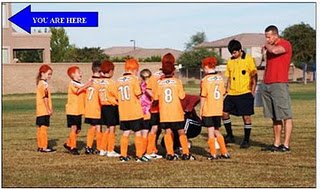
Just Looking

“He’s handsome, isn’t he?”

She jumped at the voice. She hadn’t realized someone had entered the room. She jerked her gaze from the group of players outside to look over her shoulder.

“I’m sorry?”

The woman’s face broke into a sly grin. “The coach. He’s hot, don’t you think?”

Yes,” she thought. “He’s all right,” she said out loud.

“I hear he’s single. Are you looking?”

Yes,” she thought. “Of course not,” she said out loud.

“I tell ya, if I wasn’t married…” the woman sighed and smiled.

She nodded politely and turned back to the window.

She was indeed looking.

.

.

.

Listen to the audio version.

*************************

Write up to 100 words, fact or fiction….

This is a themed writing meme hosted by Jenny Matlock. The goal is to write something that does not exceed 100 words (not including said prompt). The prompt was writing from the “you are here” perspective in the picture.

Home Movies, Life-condensed

We Have a Golfer in Our Family?

In an effort to get Dude out in public more (he’s an introverted sort of personality and though he’s getting better, we’re still pretty vigilant in making sure he doesn’t spend anymore time in his room than absolutely necessary), Kevin has been taking him various places on lunch break.

(Dude goes to Kevin’s office every day. He works on his programs up there, helps Kevin out with odd jobs and Kevin even has him doing janitorial work. BONUS).

One day, Kevin took Dude to the driving range. There’s one just down the street from Kevin’s office. He took a video of Dude on his phone hitting some balls.

He had nothing but good things to say about his efforts. Considering the boy has never hit golf balls outside of a putt-putt course, we thought he did pretty well.

We’re working really hard to help build Dude’s confidence. The kid has no confidence. ZERO. NONE. I blame myself. I think I “broke” his spirit by being too strict with him growing up, if you want the truth. Now, we’re trying to repair the damage by exposing him to all sorts of experiences to help him find his “niche.”

Life can’t happen unless we MAKE it happen, right?